|
WHAT IS DRY ICE BLASTING?
Dry ice blasting is a revolutionary blasting method
that uses small, compact dry ice pellets as the blasting
material. The dry ice pellets are accelerated in a jet of
compressed air similar to that used in traditional blasting
methods.
Dry ice blasting is designed to replace high-pressure hosing
and other traditional blasting methods that use materials
such as sand, glass and plastic as abrasive agents. In addition,
however, a wide range of other cleaning methods that involve
the use of hazardous chemicals, solvents, etc., can with
advantage be replaced by dry ice blasting.
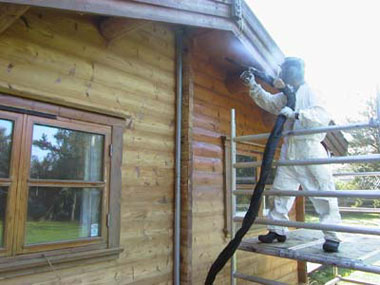
The unique feature of dry ice as a blasting material is
that it
vaporises on contact with the surface to be cleaned. Treated
surfaces are therefore left dry and clean, without residues
of detergents or blasting materials. As the process is completely
dry and non-conductive, dry ice blasting can be used where
other methods are unsuitable. For example, electric motors
and
equipment with electric, pneumatic or hydraulic components
can be cleaned direct using dry ice blasting.
The system produces no waste products. Only the coating
that has been removed remains to be disposed of, and this
can usually be swept or vacuumed from the floor beneath
the treated object.
Dry ice blasting is ideal for removing coatings such as
adhesives, varnish, oil, grease, coal dust, soot, mould
release agents and bitumen - to name but a few of the materials
we remove daily using the process.
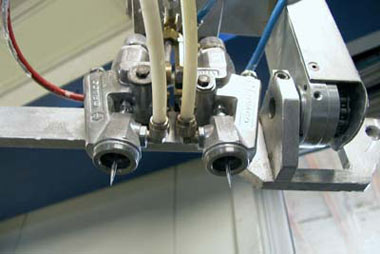
Dry ice blasting will often allow a company's production
equipment to be cleaned while in operation without the need
for dismantling and costly downtime.
Dry ice blasting is non-abrasive, and surfaces are therefore
treated gently. The system can thus be used on easily-damaged
surfaces like nickel, chromium and soft aluminium.
The process is dry, and no waste materials are produced.
This means that cleaning can be carried out even during
short production shutdowns.
|
 Malaysian distributor: Preva IceTech Sdn Bhd


